
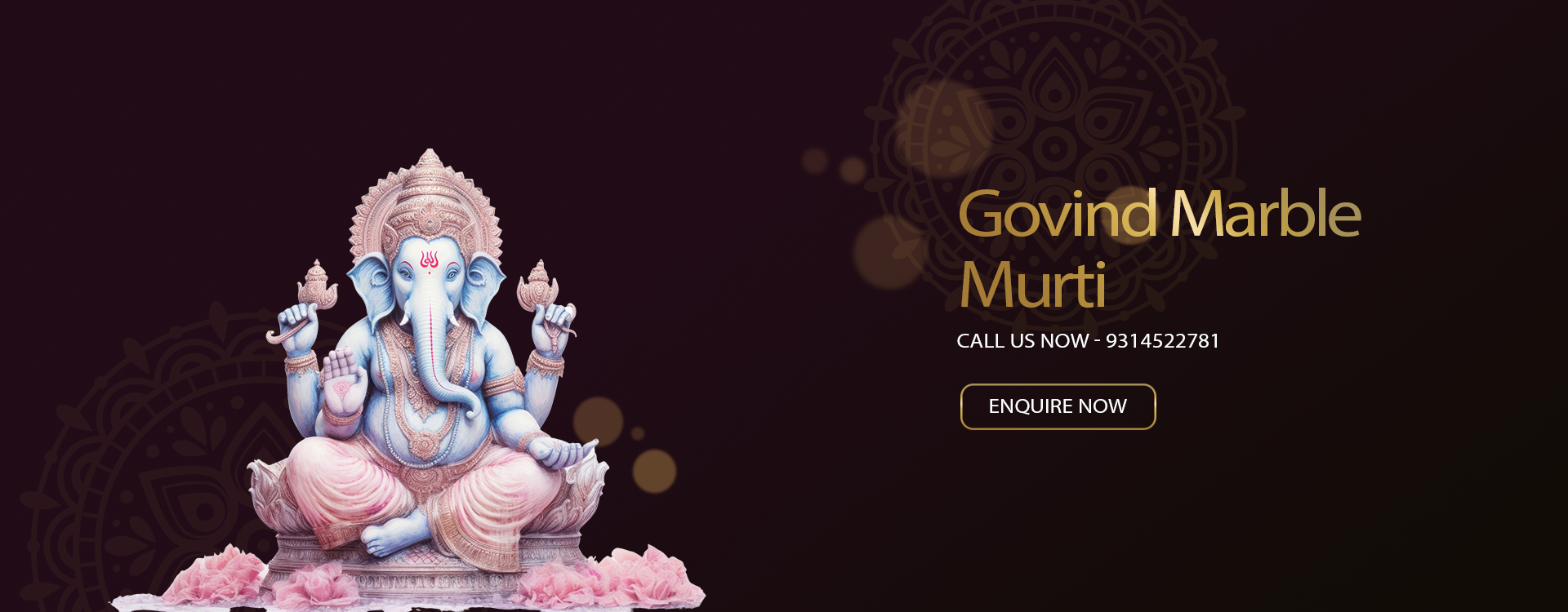
Families rarely disagree about wanting Lord Ganesha in the mandir; they disagree about which marble form fits the shelf, the budget, and the story they want to tell every morning. A catalogue photo cannot answer that alone—you need a clear idea of posture, symbolism, and how much depth the murti will steal from a narrow puja alcove. This guide walks through the most requested Ganesh forms in Indian homes and what buyers usually optimise for when they commission hand-carved marble in Jaipur.
Siddhi Vinayak and seated calm poses
The seated Ganesh with modak and blessing hand is the default for urban flats. It needs less depth than a dancing or standing piece, and the face reads well from three to four metres in a combined living–puja layout. Workshops vary trunk direction and ornament density; a simpler halo keeps the overall height lower when ceiling clearance is tight. If your priority is daily darshan without crowding the room, start with this family before you explore exotic variants.
Standing and blessing Ganesha for depth-rich niches
Standing forms need more footprint and stable base engineering, especially above fifteen inches. They suit dedicated puja rooms where the murti is the visual anchor, not a side shelf detail. Ask for weight and centre of gravity early—marble is heavy, and a forward-leaning blessing pose needs a thicker base plate. When you browse our Ganesh marble murti range, note whether you want open or closed lotus backdrops; closed backs photograph well but add inches to depth.
Dancing Ganesha and festival drama
Dancing poses carry movement and jewellery flourishes that demand wider side clearance for aarati rotation. They are popular when the family wants a single “hero” piece for a new home, not a quiet corner deity. Carving time and cost rise with drapery and raised hands, so quotes jump faster than height alone would suggest. If you love the drama, budget both money and space; otherwise you will resent the piece every time a thali brushes the arm.
Regional and temple-reference styles
Dagdusheth-style crowns, wide eyes, and specific jewellery patterns are emotional choices tied to pilgrimage memory. Replicating them faithfully in marble requires clear reference photos and patience on ornament rounds. Machine-polished imports rarely match the warmth of hand-finished eyes and teeth lines; that is where Jaipur workshops still earn trust. Specify whether you need natural unpolished skin with only face highlights—finish changes maintenance and glare under LED spotlights.
Size bands that match Indian rooms
Nine to twelve inches suits most wall shelves with a two-foot clear height. Fifteen to twenty-one inches works on floor pedestals when children will not knock the piece. Above twenty-four inches, think structural load and crate door width before you fall in love with a photo. Share ceiling height, shelf depth, and a phone photo of the corner; we will suggest a height band that keeps proportion respectful without dominating the room.
Stone colour and finish for Ganesh
Not every “white” is Makrana. Some families prefer a warmer off-white to reduce glare under cool LEDs; others insist on high-contrast veining that shows carving depth. Ask your supplier to photograph the block or rough under the same light temperature you use at home. Polished surfaces look festive but highlight every fingerprint; matte or satin skin with polished jewellery lines can reduce maintenance anxiety in busy households.
Accessories, chatra, and seasonal dressing
If you plan heavy flower malas, brass chatra, or fabric umbrellas during festivals, leave vertical margin above the crown in your height calculation. Marble does not forgive last-minute shelf extensions. Discuss whether the workshop can drill discreet brass inserts for chatra rods—ad hoc drilling at home risks cracks along hairlines.
Export, GST invoice, and after-sales
If relatives abroad fund the murti, ask for a clear invoice describing stone type and workmanship—not just a generic “idol” line—so customs questions stay straightforward. Reputable Jaipur workshops document weight and dimensions for air cargo quotes before you pay the balance. Keep one spare corner photo after installation; if you ever need professional cleaning advice, dated images help conservators.
When families disagree on form
One generation may want traditional Dagdusheth references while another prefers minimalist carving. Compromise on size and finish first—those drive cost and safety—then let ornament density follow budget. Workshops can often simplify jewellery without changing posture once everyone agrees on the underlying pose.
Making the choice
Pick the form that matches your ritual rhythm, not only a trend. Seated for quiet daily puja, standing or dancing when the mandir is a focal point of the home. When you are ready to compare stone grades and delivery timelines, message us on WhatsApp at +91 93145 22781 with your room dimensions—we answer quickly during business hours and can show workshop photos of pieces in progress that match the blessing you want.